I remember with fondness the exaltation, the joy and the pleasure I felt when I first forayed into literature. (I also fondly remember the various 'brooding spots' - park benches, groves, hilltops, etc. - where I read them!) Borges, Cortázar, Dostoyevsky, Nabokov, Joyce etc.! Here I had finally found the intellectual stimulation that school had never provided to me!
And this was before I started studying literature academically. (In fact, I found GCSE English so mind-numbingly tedious that I never paid attention in class and truanted from most of the lessons.) In those days, literature for me was never something to analyse. It was irrational - and perhaps that was part of the charm. Dostoyevsky, for example, makes small details and scraps of dialogue play off each other in an incredibly intense and exciting way. With Borges, I was perhaps less interested in the intertextuality and philosophical subtexts than I was with the fabulous imaginative landscapes that he conjures up. My mind was fucked up at the time and literature was the ideal stimulant to heighten my excitable - and corrosive - consciousness. Like the music I listened to, it was cerebral sex.
When you study literature academically, one of course has to rationalise the text. One has to do scrutinise the most minute detail, do close readings and, most crucially, parse some sort of thesis. Your personal connection to the text is of no importance; one has to remain objective and aloof!
I have actually grown to like this, namely because literature as an academic discipline is so wide-ranging. You can read a text whatever way you want; there are no right or wrong answers. Literature covers every single facet of human existence, so is so interdisciplinary that you will find yourself reading about history, philosophy, psychoanalysis etc. etc.
Whatever the case, human creativity is a very mysterious activity. How do I know where these words come from as I write them down? Whatever the progress neuroscience has made in analysing causation, there can be no way of certifying how or why an author has chosen to write a book. You can take it away, deconstruct it and offer some sort of interpretation but, ultimately, the cognitive processes that contributed to its finality are very nebulous indeed. The greatest irony about human creativity is that we can never be truly sure what leads to our actions. The analyses of creative praxis in many ways are an attempt to rationalise the irrational.
Sunday, 26 May 2013

Monday, 6 May 2013
Herne Bay
I have lived the past year in Herne Bay. It is located in the South East of Kent, it is a 45 minute bus ride away from Canterbury and it overlooks the North Sea.
Generally, it's been lovely. When I go to sleep I can hear the tides ebbing in (which I think induced a spate of wild dreams).
I'll be moving back to Canterbury next year. It's been worth it, though. I can now say I've lived by the sea at some point in my life. I'll also miss the silence and the tranquility (I haven't lived in a student house). The pictures below are not indicative of what it's like most of the year. Usually, it is grey, windy and cold!


Saturday, 27 April 2013
The Second Heimat
This was probably one of the first, if not the first, art-house film I saw. I saw it at age of fifteen. It captivated me and fuelled my imagination. Heimat was a 15-hour long film (divided into 11 episodes) about a German village. It covers a village from 1919 until 1984, amidst the backdrop of sweeping historical change. The Second Heimat is a 25-hour long film (divided into 13 episodes). It follows a young aspiring composer who leaves the village, vows to never return, and settles in Munich to study composition. It is set in between 1959 and 1970 and covers a range of characters. Most of these characters are either artists of some sort of another, and are either fiercely avant-garde or partake in political activism. An equally good series was made - called Heimat 3: A Chronicle of Endings and Beginnings - which returns to this village after the fall of the Berlin wall.
There is a scene in the film, where a virtuosic cellist called Clarissa spends Christmas in a hospital ward. To pass the time, she reads Robert Musil's mammoth 1000-odd page tome The Man Without Qualities. And indeed, this film is a celluloid equivalent of that kind of undertaking. It requires endurance, patience and attention. A sizable chunk of your life will be devoted to this. (Though, if you think about it, how many hours has one whiled away in front of the television set? Or the contemporary equivalent - the internet?)

The film follows Herman Simon, a vain, proud and jaundiced aspiring composer. The films begins with him making two vows: that he will never "love" again and that he will never return to the German village, Schabbach. This, I think, highlights the film's only major weakness: its frequent lapse into bloated melodrama. That aside, the cinematography is lush and the first episode in particular is especially propulsive and engaging. Hermann's awe at this vast, sprawling city, and his discovery of atonal avant-garde music, are particularly striking. Although Herman essentially remains the central character, each episode is allocated its own protagonist.
It must be noted that the English translation of the title is problematic. The German word 'Heimat,' in itself, is loaded with implications. It is a word which has very specific connotations as regards Germany. It means 'Homeland' (though Germans insist that it is difficult to translate to foreigners). Several fascist and right-wing films were made called 'Heimat,' which glorified chauvinism and national pride. Edgar Reitz's first Heimat series was interesting in that it was a film refracted through a more leftist perspective. The Second Heimat refers to a second home we adopt as adults. The title Heimat 2 (the official English translation) suggests that it is a kind of sequel, which in many ways it is not. The narrative is not a continuation from the first installation, it is a departure.

The film highlights a rift between an older generation and the rise of a new one. The older generation, most of whom are former Nazis, are far more socially conservative and try to temper the rampant radicalism of these youngsters. The film also traces the emergence of three movements: the German New Wave (which proudly declares 'Papa's cinema is dead'), the classical avant-garde and the radical left known as the 'Red Army Faction' (which later resorted to terrorism). Whilst these older figures, for the most part, are not depicted kindly, the younger characters are very listless and impetuous. The political activists, in particular, seem less interested in actual revolution than they are in sexual liberation (there is a Hippie commune) or to simply derive a false sense of comfort (as the character Helga seems to). The characters Helga and Ansgar seem to embody this abrasive angst the most. They feel riled by the failure of their parents to recognise their Nazi past and by their conservative intolerance.
The artists, for the most part, are crushed by the sheer weight of their own ambitions. Hermann concocts megalomaniac schemes which never truly pan out. He is eventually bequeathed his own electronic studio where he can do whatever he wants (we see echoes of Stockhausen and Boulez's IRCAM here). Nothing really ever materialises and he later admits to himself that he has been granted the project because of the youthful idealism he radiates. Similarly, the film directors try directing several film projects, but more often than not they never get off the ground.

The earlier episodes, in my mind, are better and the later ones can lag at times. This is chiefly because the earlier characters are more interesting. The earlier characters are musicians whereas the later ones are film directors. The musician characters have more of a vibrancy to them because they are actual musicians (their performances in the film are genuine and they are stellar), whereas the film directors are actors. Music, in itself, is more of a nebulous form than film and therefore lends itself to dramatisation. Film is more clearly defined and the dramatisation of film directors therefore becomes more problematic, since the art of these characters carries more semantic connotations.
Although the film deals with the German New Wave, and in many ways is a chronicle of the 60s avant-garde, it is shot in a classical manner. There is no experimentation with film form or anything of the sort. Ultimately, the film's chief concern is in the manifold ways it treats narrative. It has all the scale and breadth of reading a large literary novel. That's not to say that it isn't beautifully shot. The artful interchange between colour and black and white which was used in the first series is once more deployed to great effect. (Especially since day time is shot in b/w whereas night time is shot in colour, which highlights the sense of excitement it has for these characters.
Even though these characters have lofty pretensions, the film does not shy away from exploring several love affairs and unfortunate tragedies. Some of these affairs have a lot of fizz to them (such as the one between Ansgar and Clara), though others are less interesting and can become very heavy-handed. The film at least has three tragic deaths. As I said before, this kind of melodrama can become a little heavy-handed at times, though more often than not the relationships between characters are three-dimensional and thoroughly engaging.
Finally, I'll stress the importance this film has had in my life. I had just discovered at the time I began listening to 20th century classical music, so the dramatisation of composers, at the time, I found very compelling. Ultimately, it is a big, big film and it has taken me to places few films have done.
There is a scene in the film, where a virtuosic cellist called Clarissa spends Christmas in a hospital ward. To pass the time, she reads Robert Musil's mammoth 1000-odd page tome The Man Without Qualities. And indeed, this film is a celluloid equivalent of that kind of undertaking. It requires endurance, patience and attention. A sizable chunk of your life will be devoted to this. (Though, if you think about it, how many hours has one whiled away in front of the television set? Or the contemporary equivalent - the internet?)

The film follows Herman Simon, a vain, proud and jaundiced aspiring composer. The films begins with him making two vows: that he will never "love" again and that he will never return to the German village, Schabbach. This, I think, highlights the film's only major weakness: its frequent lapse into bloated melodrama. That aside, the cinematography is lush and the first episode in particular is especially propulsive and engaging. Hermann's awe at this vast, sprawling city, and his discovery of atonal avant-garde music, are particularly striking. Although Herman essentially remains the central character, each episode is allocated its own protagonist.
It must be noted that the English translation of the title is problematic. The German word 'Heimat,' in itself, is loaded with implications. It is a word which has very specific connotations as regards Germany. It means 'Homeland' (though Germans insist that it is difficult to translate to foreigners). Several fascist and right-wing films were made called 'Heimat,' which glorified chauvinism and national pride. Edgar Reitz's first Heimat series was interesting in that it was a film refracted through a more leftist perspective. The Second Heimat refers to a second home we adopt as adults. The title Heimat 2 (the official English translation) suggests that it is a kind of sequel, which in many ways it is not. The narrative is not a continuation from the first installation, it is a departure.
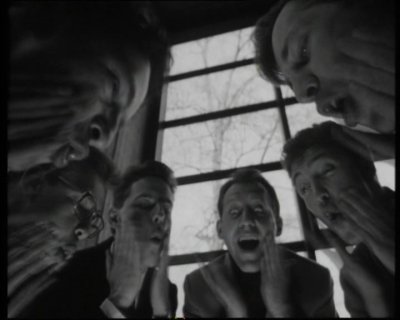
The film highlights a rift between an older generation and the rise of a new one. The older generation, most of whom are former Nazis, are far more socially conservative and try to temper the rampant radicalism of these youngsters. The film also traces the emergence of three movements: the German New Wave (which proudly declares 'Papa's cinema is dead'), the classical avant-garde and the radical left known as the 'Red Army Faction' (which later resorted to terrorism). Whilst these older figures, for the most part, are not depicted kindly, the younger characters are very listless and impetuous. The political activists, in particular, seem less interested in actual revolution than they are in sexual liberation (there is a Hippie commune) or to simply derive a false sense of comfort (as the character Helga seems to). The characters Helga and Ansgar seem to embody this abrasive angst the most. They feel riled by the failure of their parents to recognise their Nazi past and by their conservative intolerance.
The artists, for the most part, are crushed by the sheer weight of their own ambitions. Hermann concocts megalomaniac schemes which never truly pan out. He is eventually bequeathed his own electronic studio where he can do whatever he wants (we see echoes of Stockhausen and Boulez's IRCAM here). Nothing really ever materialises and he later admits to himself that he has been granted the project because of the youthful idealism he radiates. Similarly, the film directors try directing several film projects, but more often than not they never get off the ground.

The earlier episodes, in my mind, are better and the later ones can lag at times. This is chiefly because the earlier characters are more interesting. The earlier characters are musicians whereas the later ones are film directors. The musician characters have more of a vibrancy to them because they are actual musicians (their performances in the film are genuine and they are stellar), whereas the film directors are actors. Music, in itself, is more of a nebulous form than film and therefore lends itself to dramatisation. Film is more clearly defined and the dramatisation of film directors therefore becomes more problematic, since the art of these characters carries more semantic connotations.
Although the film deals with the German New Wave, and in many ways is a chronicle of the 60s avant-garde, it is shot in a classical manner. There is no experimentation with film form or anything of the sort. Ultimately, the film's chief concern is in the manifold ways it treats narrative. It has all the scale and breadth of reading a large literary novel. That's not to say that it isn't beautifully shot. The artful interchange between colour and black and white which was used in the first series is once more deployed to great effect. (Especially since day time is shot in b/w whereas night time is shot in colour, which highlights the sense of excitement it has for these characters.
Even though these characters have lofty pretensions, the film does not shy away from exploring several love affairs and unfortunate tragedies. Some of these affairs have a lot of fizz to them (such as the one between Ansgar and Clara), though others are less interesting and can become very heavy-handed. The film at least has three tragic deaths. As I said before, this kind of melodrama can become a little heavy-handed at times, though more often than not the relationships between characters are three-dimensional and thoroughly engaging.
Finally, I'll stress the importance this film has had in my life. I had just discovered at the time I began listening to 20th century classical music, so the dramatisation of composers, at the time, I found very compelling. Ultimately, it is a big, big film and it has taken me to places few films have done.
Friday, 19 April 2013
Thoughts on William Faulkner
In this post I will try - emphasis on try - to write an appraisal on one of my favourite writers, William Faulkner. The sheer joy I experience when I get caught up in one of his streaming paragraphs is somewhat inexpressible. Every time I have finished a Faulkner novel, it convinces me that this is the furthest you can take literature. I get the 'tingle,' if you like.

Faulkner is a writer with a very world-wide appeal because of two reasons: 1) He deals with universal themes of suffering, unrequited love, conflict and 2) He created his own imaginary county, Yoknapatawpha, where most of his novels are set. Creating a new territory and making it your own is something that resonates with any writer of fiction. Although the vernacular of the American South is burrowed into everything he does, his work has struck a chord with Latin-American, European and Asian writers. This is because his work has shown them that you can take something very quintessential from your culture and transfigure into a mythologised world of your own making.
Although he does allude to many writers, one does need to recognise intertextual references to understand his writing. This sets him apart from other modernists like T. S. Eliot and James Joyce, whose dense writings often demanded the reader to be well-read in classical literature. Faulkner, meanwhile, is self-referential and acknowledges the own construction of his texts. Sometimes you have to read his books twice to make sense out of them, or a second reading will simply be more enhanced and revelatory. (Just like a second hearing of a piece of music will reveal more to you than the first.)
The staple of any Faulkner novel is a decadent family, living under outmoded socio-political strictures. There is a memorable scene in As I Lay Dying, where a member of the Bundren family walks into a convenience store in a bustling centre. She is barefooted, with an outworn dress and completely unkempt. Having grown up in an antiquated rural environment, she is a stranger to this prototypically modern society. The kind of environment these characters inhabit is one bereft of cars, high-ways or industrialisation. Instead it is a microcosmic society in which the word of the bible is taken at face value, where hierarchical family structures from several decades prior persist, people lack a formal education and blacks are firmly subordinated to white supremacy.
A lot of people quarrel who the better writer is: James Joyce or Virginia Woolf. Whose use of stream of consciousness was better? Many concluded it is Joyce, as he is more fragmentary and we generally don't think in elaborate paragraphs. Yet my own thought processes, I think, more closely resemble Faulkner's prose than Joyce's. If I get over stimulated a whole barrage of ideas stream out. These thoughts tend to be overlong and protracted, but not clearly defined. Several of them, too. Quentin Compson's breakdown in The Sound and the Fury is a masterful depiction of a mind coming to terms with discord. He sifts through his past, but mundane incidents in the present also sway his thoughts. Not only do I find this treatment of thought accurate, once you get caught up in it it's a wonder to read. Though, at times, it might strike you as non-sensical and you might re-read once or twice, there are moments of stark lyricism and beauty.

The characters who inhabit these novels, it must be said, are not mentally stable. (Perhaps it is those with mental disorders who find the stream of consciousness accurate...) They often have extreme pathologies. There are murderers, incestual affairs and the most unusual predilections. Quentin Compson is obsessed with his sister Caddy and by how she was so pure and virginal in her youth. Constant images of her purity come back to haunt him and permeate his thoughts. He cannot come to terms with her later promiscuity. Similarly, there's the turbulent love affair between Charles and Eulalia Bon in Absalom, Absalom!, who are brother and sister (unbeknownst to them to begin with). Certain characters have been so isolated and so deprived of an education that they lash out in the most extreme ways. In Absalom, Absalom!, Wash Jones kills the family patriarch Sutpen and thus ends years of brutal coercion and misery. Joe Christmas in Light in August murders his lover and becomes publicly demonised. He is mentally scarred by the abuse he has received for his racial colour and ruins his reputation after a fit of anger.
Most of these narrators and protagonists are marginal observers. They differ widely as regards intelligence, temperament and social standing. Whether it is the Harvard undergraduate Quentin Compson, the mentally impaired Benjy or an overweight priest, most of these characters do not partake in the dramatic incidents that occur. They rationalise situations, regardless of their command of language. And even if many of the reveries of some characters might be grammatically awkward, now and then they'll knock off a sentence so beautiful it is worthy of Shakespeare. Ultimately, Faulkner is not indifferent to the tragic fate of these characters. This is why he is not a pessimist. He is compassionate for all his creations, even the so-called "idiots" like Benjy and Vardaman. Reflecting upon the plight Joe Christmas endures, one of the more thoughtful character reflects 'Poor man. Poor mankind.'

Finally, I'll consider Faulkner's use of time. His radical use of temporal ellipsis, arguably, certified his reputation as one of the most original writers of the 20th century. One critic noted that perhaps reading The Sound and the Fury from back to front would make more sense on first reading. In Benjy's narration, you can glide twenty years in time within a couple of sentences. As I Lay Dying rotates around fifteen different narrators and therefore has a very detailed and multifarious take on events. One of the thrills I experience upon completing a Faulkner novel - a thrill I previously described as 'inexpressible' - is how you have jumped through so many different moments in time. You are not circumscribed by a single view of events, you are presented with a polyphony of voices and viewpoints.

Faulkner is a writer with a very world-wide appeal because of two reasons: 1) He deals with universal themes of suffering, unrequited love, conflict and 2) He created his own imaginary county, Yoknapatawpha, where most of his novels are set. Creating a new territory and making it your own is something that resonates with any writer of fiction. Although the vernacular of the American South is burrowed into everything he does, his work has struck a chord with Latin-American, European and Asian writers. This is because his work has shown them that you can take something very quintessential from your culture and transfigure into a mythologised world of your own making.
Although he does allude to many writers, one does need to recognise intertextual references to understand his writing. This sets him apart from other modernists like T. S. Eliot and James Joyce, whose dense writings often demanded the reader to be well-read in classical literature. Faulkner, meanwhile, is self-referential and acknowledges the own construction of his texts. Sometimes you have to read his books twice to make sense out of them, or a second reading will simply be more enhanced and revelatory. (Just like a second hearing of a piece of music will reveal more to you than the first.)
The staple of any Faulkner novel is a decadent family, living under outmoded socio-political strictures. There is a memorable scene in As I Lay Dying, where a member of the Bundren family walks into a convenience store in a bustling centre. She is barefooted, with an outworn dress and completely unkempt. Having grown up in an antiquated rural environment, she is a stranger to this prototypically modern society. The kind of environment these characters inhabit is one bereft of cars, high-ways or industrialisation. Instead it is a microcosmic society in which the word of the bible is taken at face value, where hierarchical family structures from several decades prior persist, people lack a formal education and blacks are firmly subordinated to white supremacy.
A lot of people quarrel who the better writer is: James Joyce or Virginia Woolf. Whose use of stream of consciousness was better? Many concluded it is Joyce, as he is more fragmentary and we generally don't think in elaborate paragraphs. Yet my own thought processes, I think, more closely resemble Faulkner's prose than Joyce's. If I get over stimulated a whole barrage of ideas stream out. These thoughts tend to be overlong and protracted, but not clearly defined. Several of them, too. Quentin Compson's breakdown in The Sound and the Fury is a masterful depiction of a mind coming to terms with discord. He sifts through his past, but mundane incidents in the present also sway his thoughts. Not only do I find this treatment of thought accurate, once you get caught up in it it's a wonder to read. Though, at times, it might strike you as non-sensical and you might re-read once or twice, there are moments of stark lyricism and beauty.

The characters who inhabit these novels, it must be said, are not mentally stable. (Perhaps it is those with mental disorders who find the stream of consciousness accurate...) They often have extreme pathologies. There are murderers, incestual affairs and the most unusual predilections. Quentin Compson is obsessed with his sister Caddy and by how she was so pure and virginal in her youth. Constant images of her purity come back to haunt him and permeate his thoughts. He cannot come to terms with her later promiscuity. Similarly, there's the turbulent love affair between Charles and Eulalia Bon in Absalom, Absalom!, who are brother and sister (unbeknownst to them to begin with). Certain characters have been so isolated and so deprived of an education that they lash out in the most extreme ways. In Absalom, Absalom!, Wash Jones kills the family patriarch Sutpen and thus ends years of brutal coercion and misery. Joe Christmas in Light in August murders his lover and becomes publicly demonised. He is mentally scarred by the abuse he has received for his racial colour and ruins his reputation after a fit of anger.
Most of these narrators and protagonists are marginal observers. They differ widely as regards intelligence, temperament and social standing. Whether it is the Harvard undergraduate Quentin Compson, the mentally impaired Benjy or an overweight priest, most of these characters do not partake in the dramatic incidents that occur. They rationalise situations, regardless of their command of language. And even if many of the reveries of some characters might be grammatically awkward, now and then they'll knock off a sentence so beautiful it is worthy of Shakespeare. Ultimately, Faulkner is not indifferent to the tragic fate of these characters. This is why he is not a pessimist. He is compassionate for all his creations, even the so-called "idiots" like Benjy and Vardaman. Reflecting upon the plight Joe Christmas endures, one of the more thoughtful character reflects 'Poor man. Poor mankind.'

Finally, I'll consider Faulkner's use of time. His radical use of temporal ellipsis, arguably, certified his reputation as one of the most original writers of the 20th century. One critic noted that perhaps reading The Sound and the Fury from back to front would make more sense on first reading. In Benjy's narration, you can glide twenty years in time within a couple of sentences. As I Lay Dying rotates around fifteen different narrators and therefore has a very detailed and multifarious take on events. One of the thrills I experience upon completing a Faulkner novel - a thrill I previously described as 'inexpressible' - is how you have jumped through so many different moments in time. You are not circumscribed by a single view of events, you are presented with a polyphony of voices and viewpoints.
Sunday, 7 April 2013
Short Stories
I have uploaded a few recent-ish stories to my blog.
These are stories I've now decided not to publish in magazines. After I had a story published (my first ever submission!), I thought anything I'd send anywhere would get accepted. Wrong. Everything has been rejected.
This has frustrated me a little. I've abstained from publishing them online in the past, but I've now realised that it's the only way they'll get read.
These stories, I guess, are a middle-ground. They aren't the best pieces of written, so I've now decided I won't try to publish them. But they aren't bad enough to make me embarrassed, either.
You can access them via the navbar, on the right.
These are stories I've now decided not to publish in magazines. After I had a story published (my first ever submission!), I thought anything I'd send anywhere would get accepted. Wrong. Everything has been rejected.
This has frustrated me a little. I've abstained from publishing them online in the past, but I've now realised that it's the only way they'll get read.
These stories, I guess, are a middle-ground. They aren't the best pieces of written, so I've now decided I won't try to publish them. But they aren't bad enough to make me embarrassed, either.
You can access them via the navbar, on the right.
Thursday, 21 February 2013
Thoughts on Planet Zhelanie
Right, it may seem very crass of me - maybe even a little egocentric and shallow - that I'm about to write a small blog post on one of my short stories.
Planet Zhelanie is my favourite piece I've written to date. That's not to say that it's the most well-written. Nor that it's without its flaws. (The whole piece might just be seen as a flawed experiment.) But it's dense, seamless and ambitious. There is far too much going on in all departments. At the very least, this should be a novella, not an eight page short story. This is why I am very eager to develop it into something bigger.
The afterlife as a parallel universe
I don't adhere to any religious creed. I am Agnostic, which I think is a very healthy position to take. All imaginative visions of the afterlife have struck me as so tawdry and simplistic that it's clear that they are man-made explanations.
First of all, why does the afterlife have to take place in some kind of spiritual sphere? Do we carry souls? Are we monitored by angels? Angels?
The thought that the afterlife could take place in a parallel universe has intrigued me. (Please be aware that this is a creative conjecture, not something I seriously espouse.) The laws of physics in this universe are always the same. But in a parallel universe, could they be different? If the laws of physics functioned differently, perhaps time might as well. Let us imagine that there are a multiplicity of worm-holes etc., which might cause us to experience the same situation time and time again (with slight or drastic variants). And if time functioned differently, perhaps our cognition might be different as well. We might perceive that only a few days have passed, when in fact thousands of years have elapsed.
The nothingness of the self
"Personality is a mirage maintained by conceit and custom, without metaphysical foundation or visceral reality."- J. L. Borges
I was very influenced by an early essay Borges wrote called 'The Nothingness of Personality.' In this essay, Borges rejects the Romantic notion of an artist being a palpable presence in the text. Instead, the text must be a series of clearly defined symbols with no traceable progenitor.
The fact that I disagree with this is beside the point. (From my own experience, any piece of writing you commit to paper will have some aspect of your personality in it, even if Borges claims that the very idea of a personality is illusory!) The idea of an erased self, though, is very interesting.
I read up on Aristotle's take on the afterlife, which I'm sure Borges had read (after all, he had read everything - especially classical literature!), and which strongly relates to one of the central ideas of the piece. The Platonic doctrine, which was inherited by Christianity, maintains that you have a soul etc. and that as long as you live your life altruistically and have done good deeds, you will go to Heaven. You still have a clearly defined personality and it is this component which is transposed into a heavenly celestial plane.
The Aristotelian view is that, when you die, your personality and ego is completely extirpated. You must lose all aspects of your personality in order to subsume yourself into this celestial body. This is how Planet Zhelanie works. You must lose your ego and become a kind of cipher with no identifiable soul, character or personality. Your success on this planet is dependent on the degree to which you reduce your ego.
Great literature and Russia
Though this planet I imagine in this piece may accommodate itself to whichever individual that enters the it (in a rather cheesy way, I describe this in the story as something like 'through concentration and application I managed to crack the codes of this ambiguous planet'), the central character is an aspiring Russian writer.
Russia is a very complex country with a very rich literature and history. (Along with Aristotle, an epigraph I would like for the expanded version would be a quote from Dostoyevsky saying that no foreigner is capable of understanding the complexities of Russia.) There is a real breadth and scope to the novels of Dostoyevsky, Tolstoy and Turgenev. They have now attained canonical status. As the character develops in the planet, the greater writer he becomes, even becoming the author of both War and Peace and The Brothers Karamazov.
Hazardous wishes
This idea of wishes degenerating into chaos was influenced by Andrei Tarkovsky's film Stalker and, to a lesser extent, Solaris. This idea might seem a little trite. But, as for Tarkovsky, it is a starting point for a number of other themes and interests.
The character's wishes include meeting his deceased father, becoming a masterful novelist and meeting his deceased wife. As explained above, he only attains any of these wishes by eliminating his selfishness and egocentricity.
Borgesian themes
The whole piece is very Borgesian. The most palpable aspect is how 'a circular temple is engendered' which produces a series of children who study a massive tome the writer has written. I guess this is a little nod-of-the-cap to the story 'The Circular Ruins.' There are also two episodes where two characters, who are each others' double, in a room surrounded by mirrors. Suggesting infinity, rather than duality.
Time
As mentioned above, time works differently in this planet. How so? In the case of this planet, time is circular. The structure of the story is episodic. There are a series of episodes where the character is under less control, followed by episodes, under the same setting, where he has more control.
Subservience, salvation and love
The character is named Igor, which I guess could be a nod to Frankenstein and symbolical of how meek and mild he is. (In fact, I chose the name because it's Russian, I only realised its significance when someone else pointed it out.) The character begins in the story as a child. He is small, weak and frequently trodden on. As he becomes older and reaches old age he practically becomes a God in the planet after writing a literary work and having fathered a whole school of progenies as a result.
After been subservient to others (other writers, his father and a double who ridicules him), Igor finds salvation through love. (That does sound lame!) So, just as in this meaningless universe where things work when love is in place, so it does in this one. He finds his salvation by meeting his wife Isla. (Spanish for 'Island' and thus connotative of salvation.)
If you'd like to read what I would call a draft version, email me at simoncangas@hotmail.com
I'd also like to point out that, if you are one of nine people to own my Confronting Reality book, that is not the current version as there are a few errors as regards wording.
Below is a 8.15 minute audio excerpt of the story.
Planet Zhelanie is my favourite piece I've written to date. That's not to say that it's the most well-written. Nor that it's without its flaws. (The whole piece might just be seen as a flawed experiment.) But it's dense, seamless and ambitious. There is far too much going on in all departments. At the very least, this should be a novella, not an eight page short story. This is why I am very eager to develop it into something bigger.
The afterlife as a parallel universe
I don't adhere to any religious creed. I am Agnostic, which I think is a very healthy position to take. All imaginative visions of the afterlife have struck me as so tawdry and simplistic that it's clear that they are man-made explanations.
First of all, why does the afterlife have to take place in some kind of spiritual sphere? Do we carry souls? Are we monitored by angels? Angels?
The thought that the afterlife could take place in a parallel universe has intrigued me. (Please be aware that this is a creative conjecture, not something I seriously espouse.) The laws of physics in this universe are always the same. But in a parallel universe, could they be different? If the laws of physics functioned differently, perhaps time might as well. Let us imagine that there are a multiplicity of worm-holes etc., which might cause us to experience the same situation time and time again (with slight or drastic variants). And if time functioned differently, perhaps our cognition might be different as well. We might perceive that only a few days have passed, when in fact thousands of years have elapsed.
The nothingness of the self
"Personality is a mirage maintained by conceit and custom, without metaphysical foundation or visceral reality."- J. L. Borges
I was very influenced by an early essay Borges wrote called 'The Nothingness of Personality.' In this essay, Borges rejects the Romantic notion of an artist being a palpable presence in the text. Instead, the text must be a series of clearly defined symbols with no traceable progenitor.
The fact that I disagree with this is beside the point. (From my own experience, any piece of writing you commit to paper will have some aspect of your personality in it, even if Borges claims that the very idea of a personality is illusory!) The idea of an erased self, though, is very interesting.
I read up on Aristotle's take on the afterlife, which I'm sure Borges had read (after all, he had read everything - especially classical literature!), and which strongly relates to one of the central ideas of the piece. The Platonic doctrine, which was inherited by Christianity, maintains that you have a soul etc. and that as long as you live your life altruistically and have done good deeds, you will go to Heaven. You still have a clearly defined personality and it is this component which is transposed into a heavenly celestial plane.
The Aristotelian view is that, when you die, your personality and ego is completely extirpated. You must lose all aspects of your personality in order to subsume yourself into this celestial body. This is how Planet Zhelanie works. You must lose your ego and become a kind of cipher with no identifiable soul, character or personality. Your success on this planet is dependent on the degree to which you reduce your ego.
Great literature and Russia
Though this planet I imagine in this piece may accommodate itself to whichever individual that enters the it (in a rather cheesy way, I describe this in the story as something like 'through concentration and application I managed to crack the codes of this ambiguous planet'), the central character is an aspiring Russian writer.
Russia is a very complex country with a very rich literature and history. (Along with Aristotle, an epigraph I would like for the expanded version would be a quote from Dostoyevsky saying that no foreigner is capable of understanding the complexities of Russia.) There is a real breadth and scope to the novels of Dostoyevsky, Tolstoy and Turgenev. They have now attained canonical status. As the character develops in the planet, the greater writer he becomes, even becoming the author of both War and Peace and The Brothers Karamazov.
Hazardous wishes
This idea of wishes degenerating into chaos was influenced by Andrei Tarkovsky's film Stalker and, to a lesser extent, Solaris. This idea might seem a little trite. But, as for Tarkovsky, it is a starting point for a number of other themes and interests.
The character's wishes include meeting his deceased father, becoming a masterful novelist and meeting his deceased wife. As explained above, he only attains any of these wishes by eliminating his selfishness and egocentricity.
Borgesian themes
The whole piece is very Borgesian. The most palpable aspect is how 'a circular temple is engendered' which produces a series of children who study a massive tome the writer has written. I guess this is a little nod-of-the-cap to the story 'The Circular Ruins.' There are also two episodes where two characters, who are each others' double, in a room surrounded by mirrors. Suggesting infinity, rather than duality.
Time
As mentioned above, time works differently in this planet. How so? In the case of this planet, time is circular. The structure of the story is episodic. There are a series of episodes where the character is under less control, followed by episodes, under the same setting, where he has more control.
Subservience, salvation and love
The character is named Igor, which I guess could be a nod to Frankenstein and symbolical of how meek and mild he is. (In fact, I chose the name because it's Russian, I only realised its significance when someone else pointed it out.) The character begins in the story as a child. He is small, weak and frequently trodden on. As he becomes older and reaches old age he practically becomes a God in the planet after writing a literary work and having fathered a whole school of progenies as a result.
After been subservient to others (other writers, his father and a double who ridicules him), Igor finds salvation through love. (That does sound lame!) So, just as in this meaningless universe where things work when love is in place, so it does in this one. He finds his salvation by meeting his wife Isla. (Spanish for 'Island' and thus connotative of salvation.)
If you'd like to read what I would call a draft version, email me at simoncangas@hotmail.com
I'd also like to point out that, if you are one of nine people to own my Confronting Reality book, that is not the current version as there are a few errors as regards wording.
Below is a 8.15 minute audio excerpt of the story.
Thursday, 7 February 2013
The transcendental power of film
Transcendence is important to me. It's never had any spiritual connotations. So I don't do any Buddhist or Hindu 'transcendental meditation' or anything of the sort. The need to be taken to a higer state of consciousness, and being taken beyond one's usual range of perceptions, is something that ameliorates the boredom of hum-drum reality. I don't necessarily seek this through spirituality or new age philosophies; much 'art' is capable of doing just that.
For me, cinema is the medium most capable of awakening transcendental feelings. With a book, or a painting, or a play etc. you are concentrating far more to disentangle a semblance of narrative or a sequence of shapes. With cinema, this is less true. In many ways, you drift through the images and words. A cinema theatre is often synonymous with dreaming and, in many ways, that's true. The level of cognition is not as rigorous; the lights dim, you sit back and you are practically transported to a whole new realm.
The film directors who take me beyond these 'usual range of perceptions' tend to be more spiritual. These include Robert Bresson, Carl Theodor Dreyer and Andrei Tarkovsky. It's interesting that their religiosity is by no means orthodox. It's usually far more idiosyncratic and personalised. (Bresson described himself as a 'Christian Atheist', which might seem like an oxymoron to some.) Spirituality for these directors in many ways allows for 'a sense of wonder' and, perhaps more pertinenty to this blog post, unearths miraculous moments which defy logical scrutiny.
In many ways, these kinds of films centred around a 'miracle' lose their potency after the first viewing. This is probably why they don't figure as highly in the Sight & Sound polls. Unlike Citizen Kane, they aren't so technically rich and complex in a way that repays countless viewings. Films like A Man Escaped and Ordet, throughout their entire trajectory, lead to the great 'miracle.' Multiple viewings are thus rendered obsolete.
Ordet's final scene involves a dead woman lying in state coming back to life. The entire film, in a slow and methodical fashion, details the gruelling tribulations she endures before giving birth to a dead child. There is antagonism and ribaldry between this family, which is Catholic, and another protestant family. (If my memory serves me right - I might be wrong! It might be the other way round...) The couple's younger son is forbidden to date a younger girl from the opposite family. The protestant priest callously sees this woman's death as a punishment from God. The woman's husband is agnostic and rejects all these religious speculations. Another relative, after excessively reading Kierregard, goes insane and believes he is a new messiah capable of miracles.

The Protestant and Catholic families congregate in the funeral procession. The son who sees himself as a messiah mutters grand words instructing her to wake up. She wakes up. The religious denominations are united and embrace one another. All rivalries dissipate. The agnostic renews his belief in God. This is an incredible and unprecedented moment because up to this point the film has played out in such a naturalistic way. There has been an emphasis on the squalor and the abject realism of these downtrodden characters. The 'miracle' indeed takes you to a higer transcendental plane.
As I said before, transcendence doesn't have to be religious! The transcendental power of A Man Escaped is alredy given away in its title. We see a WWII political prisoner who meticulously tries to escape from his prison cell. As ever with Bresson, all drama is reduced to its bare minimum. (Bresson, in fact, never hired professional actors, so as to reduce any semblance of theatricality.) No emotions are exhibited. The characters' poises are so nuanced in a way that conveys inner thought. Untypically for Bresson, this is his film with the most propulsive narrative. We have felt so attuned to the thoughts of this character, and have followed him so arduously through all his attempts at escape, that we are on the edge of our seats as he escapes from the prison cell.


For me, cinema is the medium most capable of awakening transcendental feelings. With a book, or a painting, or a play etc. you are concentrating far more to disentangle a semblance of narrative or a sequence of shapes. With cinema, this is less true. In many ways, you drift through the images and words. A cinema theatre is often synonymous with dreaming and, in many ways, that's true. The level of cognition is not as rigorous; the lights dim, you sit back and you are practically transported to a whole new realm.
The film directors who take me beyond these 'usual range of perceptions' tend to be more spiritual. These include Robert Bresson, Carl Theodor Dreyer and Andrei Tarkovsky. It's interesting that their religiosity is by no means orthodox. It's usually far more idiosyncratic and personalised. (Bresson described himself as a 'Christian Atheist', which might seem like an oxymoron to some.) Spirituality for these directors in many ways allows for 'a sense of wonder' and, perhaps more pertinenty to this blog post, unearths miraculous moments which defy logical scrutiny.
In many ways, these kinds of films centred around a 'miracle' lose their potency after the first viewing. This is probably why they don't figure as highly in the Sight & Sound polls. Unlike Citizen Kane, they aren't so technically rich and complex in a way that repays countless viewings. Films like A Man Escaped and Ordet, throughout their entire trajectory, lead to the great 'miracle.' Multiple viewings are thus rendered obsolete.
Ordet's final scene involves a dead woman lying in state coming back to life. The entire film, in a slow and methodical fashion, details the gruelling tribulations she endures before giving birth to a dead child. There is antagonism and ribaldry between this family, which is Catholic, and another protestant family. (If my memory serves me right - I might be wrong! It might be the other way round...) The couple's younger son is forbidden to date a younger girl from the opposite family. The protestant priest callously sees this woman's death as a punishment from God. The woman's husband is agnostic and rejects all these religious speculations. Another relative, after excessively reading Kierregard, goes insane and believes he is a new messiah capable of miracles.

Ordet, Carl Theodor Dreyer.
The Protestant and Catholic families congregate in the funeral procession. The son who sees himself as a messiah mutters grand words instructing her to wake up. She wakes up. The religious denominations are united and embrace one another. All rivalries dissipate. The agnostic renews his belief in God. This is an incredible and unprecedented moment because up to this point the film has played out in such a naturalistic way. There has been an emphasis on the squalor and the abject realism of these downtrodden characters. The 'miracle' indeed takes you to a higer transcendental plane.
As I said before, transcendence doesn't have to be religious! The transcendental power of A Man Escaped is alredy given away in its title. We see a WWII political prisoner who meticulously tries to escape from his prison cell. As ever with Bresson, all drama is reduced to its bare minimum. (Bresson, in fact, never hired professional actors, so as to reduce any semblance of theatricality.) No emotions are exhibited. The characters' poises are so nuanced in a way that conveys inner thought. Untypically for Bresson, this is his film with the most propulsive narrative. We have felt so attuned to the thoughts of this character, and have followed him so arduously through all his attempts at escape, that we are on the edge of our seats as he escapes from the prison cell.

A Man Escaped, Robert Bresson
When it comes to Tarkovsky, I will retract the statement that this kind of miraculous/transcendental cinema doesn't hold up to repeated viewings! His films, however, aren't entirely centred around 'one' miracle. My two favourite films of his, Andrei Rublev and Mirror, are so multi-faceted and complex that they lend themselves to repeated viewings. Although the casting of the bell in Andrei Rublev has the same quality as the two aforedescribed scenes, there have been far more layers of narrative. After Andrei Rublev's trauma, in which he renounces art, goes to a monastery and takes a vow of silence, we follow an adolescent boy who builds a bell without knowing the architectural formula (though he claims throughout that he does). There are also brilliant battle scenes with the Tartars which one can gorge oneself again and again! Mirror, meanwhile, is a film I can watch time and time again and come out enraptured. It's not a linear narrative film anyway; it's more of a collage. Its poetic quality and the beauty of the photography means that its transcendental power is more subtly expressed. The reason why it might not stand up against Citizen Kane is that it is so subjective. It lacks the kind of grandeur and universality of that film; it's more of a personal meditation.
Mirror, Andrei Tarkvosky
Subscribe to:
Posts (Atom)