Friday, 20 May 2011

Top 10 directors

I usually order these lists from bottom to top, leading from 10-1, and I intended to do just that here, but I forgot about that as I uploaded the photos, and it is always a tribulation to fidget about with images on blogger, so I'll leave it as it is.

The images I chose feature the directors, for the most part, at their most casual; I avoided choosing poncy photographs of an introspective 'artist' methodically smoking a cigarette in front of a camera. As much as I love art cinema, I don't at all like the posturing and pretence that often comes along with it.

I have compiled this list in the past, but I have since seen more films, making this new list a more accurate reflection of my film tastes.

1

Andrei Tarkovsky
Tarkovsky is a director who seeps into your mind, appropriating it and taking control of the recesses of your thought processes. I didn't at all like Tarkovsky in my first exposure to his work, Solaris, but I soon found myself having dreams influenced by the atmosphere of the film. Since then I have been flabbergasted, intrigued, haunted and ravished by the rest of his work

Personal favourite: Andrei Rublev

Russia
2

Carl Theodor Dreyer
After a hit-and-miss series of films from the silent-era (among them quite possibly one of the greatest films of all time, The Passion of Joan of Arc), Dreyer produced a small but incredibly powerful body of work in the sound era. His films reflect the dominance of a patriarchal society, depicting women repressed by the men around them. Like Bergman, he showcases characters' doubt in belief but, unlike him, always sides himself with God. And like Bresson, he portrays religious themes in a sparse austere way but, unlike him, emphasises dramatic techniques and emotion.

Personal favourite: The Passion of Joan of Arc (The entire film can be seen on YouTube.)

Denmark
3

Robert Bresson
Bresson economises almost every single aspect of film-making, yet it is minimised to the point of entrapment. Never working with professional actors, he tinkered with ordinary people instead, and his films avoid the flamboyance of theatre. Instead, Bresson's films favour the literary: the camera angles and the narrative techniques all utilise techniques more typical of a prose writer, with careful deliberation showing the inner thoughts of characters, in addition to exploring concepts more easily expressed in the written word.

Personal favourite: A Man Escaped

France
4

Krzysztof Kielsowski
The power of Kielsowki's films lie in the fact that he doesn't phrase his messages with dialogue in block capitals, he dramatises them instead. The audience is drawn to the films through his dramatisations, only later realising how forcefully it has hit their heart. His greatest films take simple moral lessons as their starting point (the ten commandments, the colours of the French flag), but from then on only tenuously relate to them.

Personal favourite: Blue

Poland
5

David Lynch
Lynch explores the dark, seedy underworld residing beneath the tranquility of suburban USA. Lynch's childhood was just that - idyll, suburban homes, fields of green - but he had such a scorching imagination that he transgressed it and, later, subverted the Hollywood facade. His films are a mind-bending experience, jostling and unnerving the viewer with a strange dream logic. Reality always seems dreadfully boring after walking out of a Lynch film

Personal favourite: Blue Velvet

USA
6

Ingmar Bergman
Exploring themes like spiritual belief, existentialism and sin, Bergman's overpower the viewer by their strength and emotional immediacy. The classic scene of the knight playing chess with death is symbiotically pretentious and fascinating.

Personal favourite: The Seventh Seal

Sweden
7

Werner Herzog
Herzog deals with obsession, a theme I am, incidentally, obsessed with... His quixotic characters, most memorably played by Klaus Kinsky, voyage after goals that are unattainable. Or in other cases, memorably played by Bruno S., they are eccentric people with peculiar talents in specific fields. His films straddle between documentary and fiction, and he has spent the last twenty years or so of his career focusing on the former.

Personal favourite: Aguirre, the Wrath of God

Germany
8

Woody Allen
From his earliest self-defined "early, funny ones" to his drama films, Woody Allen infuses the comical into the bleakest, most pessimistic scenarios. His neurotic caricature is endearing and his one-liners are amusing, but he he is also capable of producing cinema of the highest order, from the novel-like structure of Hannah and Her Sisters to the monochrome black-and-white photography of Manhattan.

Personal favourite: Crimes and Misdemeanours

USA
9

David Cronenberg
Cronenberg has always been a favourite of mine. He reflects my predilection for the unmitigated portrayal of gore, sex and morbidity, but he also has a cerebral agenda, making all sorts of social critiques that reflect the novels of Ballard and Burroughs. Since his earliest horror films, he has emphasised the importance of the human body, something that comes through in the oft-quoted statement "Long live the new flesh!"

Personal favourite: Videodrome

Canada
10

Stanley Kubrick

Kubrick is responsible for two films that are quite possibly the greatest ever committed to camera: 2001, A Space Odyssey and Dr. Strangelove. A lot of his other features are very, very strong but there is a lot in his oevure that I find rather uninteresting, especially when he produces "genre" films that are wholly concerned with sticking to the conventions of the style instead of bringing a wider palette into the film... If all his films were as strong as the two aforementioned titles then he'd top the list, but he finds himself at no. 10... Still, he was strong enough to beat other directors I am fond of, like Hitchcock, Orson Welles and Akira Kurosawa...

Personal favourite: 2001, a Space Odyssey

USA

Saturday, 14 May 2011

The aesthetic and the moral


D. W. Griffith

Many works of art that are wholly immoral are often championed on a aesthetic level, yet many grudges are held against their moral codes. First of all I will take as an example silent-era film director D. W. Griffith, who directed the film Birth of a Nation, which is both praised and denounced on equal measure.

Birth of a Nation, made in 1915, brought to use many of the cinematographic techniques that would be practiced in subsequent decades. In terms of innovation, it is deemed to be on a par with Citizen Kane, and it used extreme and dramatic camera angles interwoven with careful edits.

Yet its content and messages are unavoidably tactless. Griffith distorted American history to propagate racial politics, glorifying the Ku Klux Klan. Birth of a Nation was the first feature length film to receive vast public distribution, and for many years was the highest grossing film of all time. As a consequence of its popularity, it re-instigated the Ku Klux Klan sect, which had been dormant for several decades, and it garnered more members than it ever had in its previous inceptions.

Viewing it from this standpoint, is it worthy of praise? When a work of art is aesthetically innovative, can it be seen in a good light when it deliberately stirs up racial hatred?

The existentialist dictum is that, with the fall of religion and the rise of secularism, we must make moral choices. Figures like Sartre and Camus used literary forms to showcase individuals who pursue their own path of self-fulfilment whatever the cost. This is a case of the moral and the aesthetic intertwining.

But then there are people like me who are very keen in portraying depravity and pornography in literature - what is the difference between this and the unadulterated expression of racism? Griffith himself staunchly advocated freedom of speech, and in response to criticisms of racism, made the equally innovative but equally dubious film Intolerance.

Should there be restrictions and inhibitions as to how far you can take literature, film etc. without reaching the territory of racial fomentation? Many controversial writers, who deal with dark and lurid subject matter, actually saw themselves as moralists. J. G. Ballard always argued that his books in fact postulate moral lessons and cautions, despite him having written excessively about mutilation and perversion of every kind. The same can be said of Georges Bataille, author of what is quite possibly the most sordid book of all time, 1928's Story of the Eye, who at one point almost became a priest.

Perhaps I am raising more questions than I am answering here, and I think I'll leave this blog post on an ambiguous note. Personally, I think that racial hatred and xenophobia are admissible to write about if it is dealt with ironically but, other than that, I think that immorality should be taken the furthest most reaches if one is felt inclined to go there.

Tuesday, 10 May 2011

Top 5 Woody Allen films

Taking into account that I've only seen about thirteen of his films.

No words. Just images.

5

Sleeper

4

Deconstructing Harry
3

Annie Hall
2

Hannah and Her Sisters
1

Crimes and Misdemeanours


Friday, 6 May 2011

Provinciality in English fiction

Reflecting on my reading interests, I have realised that I don't prioritise English fiction all that much. The English writers I do read aren't quintessentially English but approach the writing craft differently. On the whole, I find that English fiction is saturated by provincialism and parochialism, which is something I will explore in this blog post.

Perhaps England was at the forefront of literary advancements during the 18th and 19th centuries - we have, after all, Sterne, Fielding, the Brontes, Dickens, etc. - but 20th century fiction has seen little innovation. Many innovative authors who are classified as 'English' were in fact expatriates: T. S. Eliot was American and Joseph Conrad was a Pole who learnt to speak English at the late age of twenty-one.

Many writers who have brought something new to English fiction have in fact grown up in foreign soil. This to me is indicative of the type of impact England has on the creative mind, that perhaps something in its psychology doesn't nurture a creative mentality. Personally, I don't think that all the hallmarks of J. G. Ballard's writing - psychological despair, extremes, desolate surroundings - could have come to life had he not spent his childhood in China during the second world war. Had he grown up in a middle-class suburb in Britain, there is no doubt that his writing would have leant onto a different direction, or maybe he would not have felt inclined to write at all.

There can be no doubt that Britain is an insular little island, with little contact with the rest of the world. Many of its academic institutions still practice and teach the same syllabuses that were taught decades ago, a system many budding authors go through, and it often shapes their writing and world-view. If writers are to go through the same decadent lectures, seminars and education isn't this going to limit their horizons?

Ballard railed against the realist 'Hampstead novel' that was prevalent in the early 20th century, and this type of fiction is often representative of a lot of English writing: an enclosed world with a limited set of characters, the same situations and the same writing style.

Often for an English writer to break out of this creatively sterile community, he often receives a lot of scorn and animosity. A writer like Anthony Burgess, who wrote prolifically in every conceivable genre, had to peregrinate through Europe for much of his life because the British press was unappreciative of him and his work. The similar can be said of Lawrence Durrell, an Anglo-Indian who was out of sorts with the British literary community, and he sought for inspiration through travelling and experiencing different cultures.

U. S. A. seems to be a breeding ground of creativity. Its sheer size, its multifarious and varied landscape, affects the human mind differently. Its fiction seems to be far more cosmopolitan, and a wealth of important concepts and ideas are developed. One only has to look at the ideas of De Lillo, the density and complexity of Pynchon and the alluring meta-fiction by Auster and one can sense something far more exciting. These authors have been brought up in a vast communication landscapes that has instilled in them a more inventive and creative streak often lacking in English fiction.

From a personal point of view, I am an aspiring writer and - I can't say that the fiction I have written is remotely capable of changing the world or anything along those lines - I am Anglo-Chilean. I think that my writing is a synthesis of Latin-American (my favourite writers are from this part of the world) and British writing, and I really do think that my perspective and world-view is incompatible with English writing traditions. I do sense provinciality in its fiction and I think that a way of remedying this is by looking at world literature, by trying out foreign writing styles and looking into foreign writers - be they canonical, long-forgotten writers who never broke through or contemporary.

Tuesday, 3 May 2011

You're being jolly naughty, Wiggins.


'Sir!' by Derek and Clive

Hahahaha, you can't get any lower than this!

Friday, 29 April 2011

Review #22

If on a Winter's Night a Traveller - Italo Calvino

Even if you don't like this novel, you can't deny it is striking. From the very beginning, it is written in second person, not addressing an acquaintance of any sort but, you, The Reader. You will either become enraptured by it and glue yourself to the pages - like I did - or simply find a completely cold pointless exercise, throwing the book across the room, dismissing it as one of the 'Books You Needn't Read' that Calvino enlists in the first few pages.

Italo Calvino has just published a new book called If on a Winter's Night a Traveller, but The Reader finds out that the copy is faulty. At the bookshop he finds a female reader, Ludmilla, and they exchange numbers. However, each new book he arrives at isn't the one he was hunting, one book leading onto the next, each one confounding you, The Reader.

None of the books bear any relation to one another. Each time you land upon them, you pour over them. They are incredibly fascinating yet stem from completely different genres - satires, travel writing, diary entries, magic realism, Borgesian oddities, even describing a fictional country called Cimmeria. However, each time you become interested in these narratives, you are abruptly interrupted and diverted to new reading material.

Everything becomes deceptive; all fiction seems apocryphal and misconstrued; you chance upon a writer who can get you out of this rut; you end up in a South American country where, once more, you are imprisoned and can't seem to escape from this surreal maze.

The ten books you encounter upon are impeccably written and will leave you with a thirst for more. One of my personal favourites, Juan Rulfo's Pedro Páramo, is paid homage to in 'Around an Empty Grave'. This writer, being the miserable lonely sod that he is, saw himself in the epistolary Kafkaesque 'Leaning from the Steep Slope'. There will be something for you to gorge on, too, Reader, a piece of writing that will resemble one of your personal favourite or resemble your personal life.

I, too, was caught up in this delirious cat-and-mouse game that is If on a Winter's Night a Traveller Reader, and found it to be a true heart-felt, emotionally-involving venture - completely devoid of the cold distant meta-fiction posturing it may be accused of. I couldn't recommend it enough, Reader, and I hope you enjoy it as much as I did.

Thursday, 21 April 2011

The remote edges #18

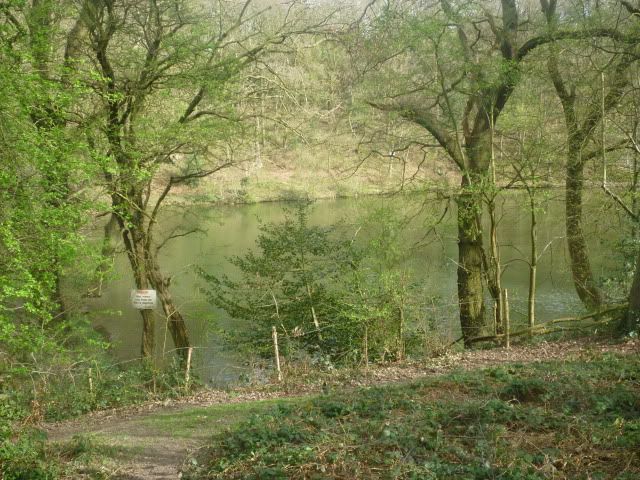
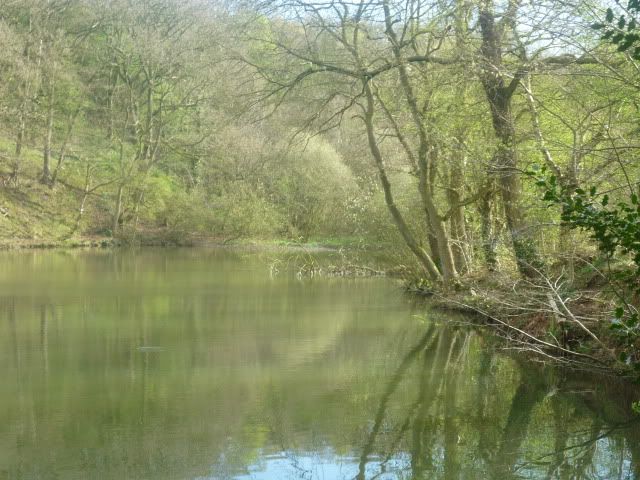
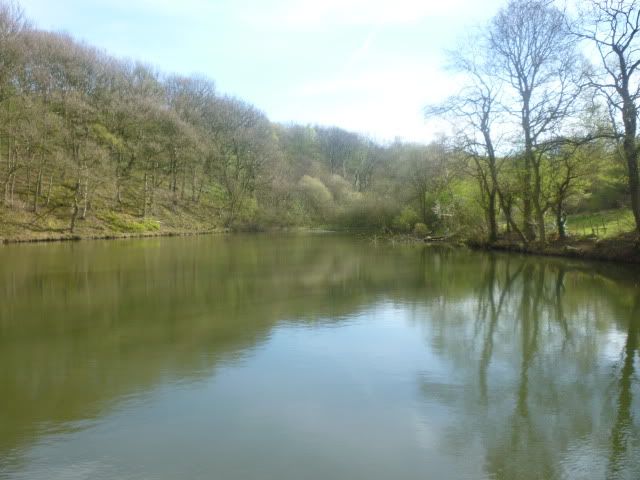
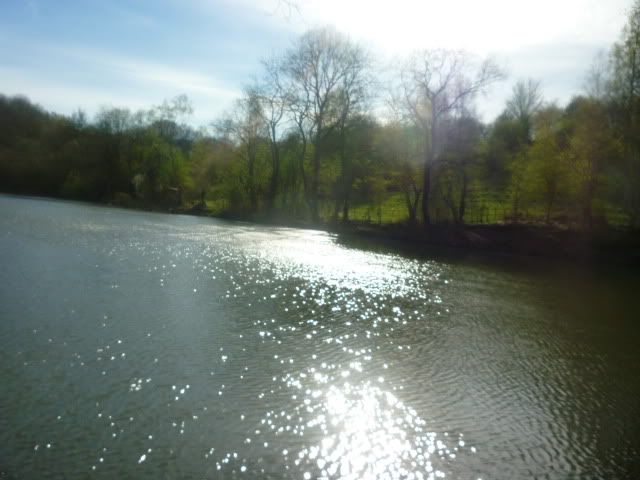
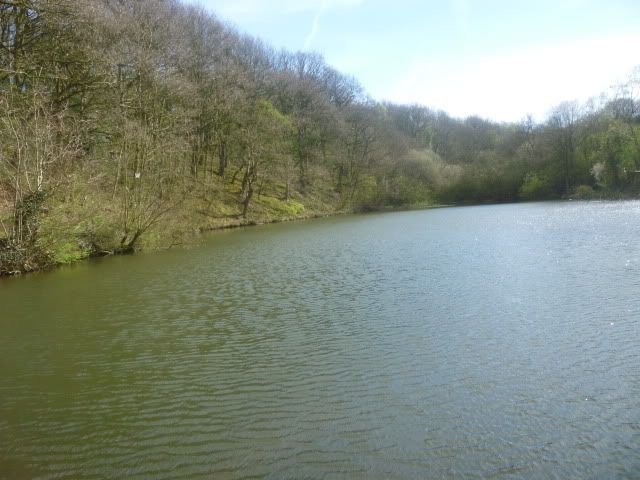
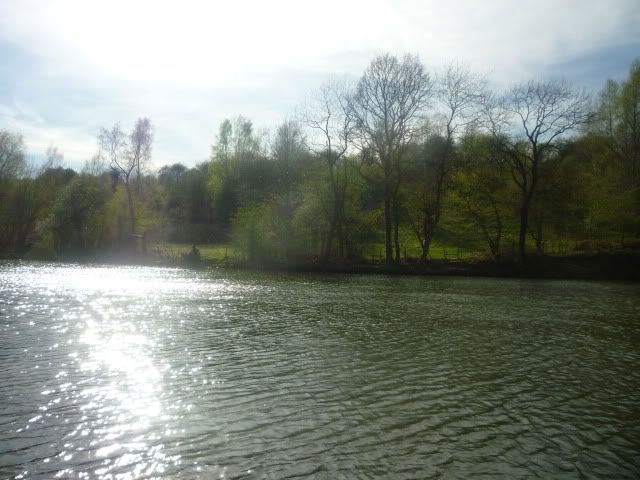
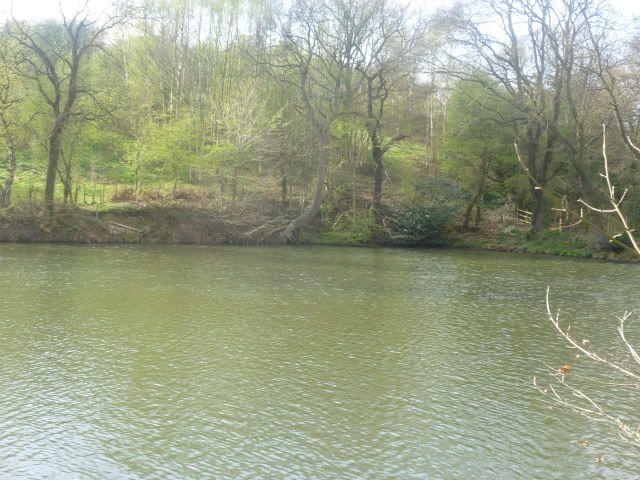
These photos caputre my favourite place on earth. I truly felt I had discovered a rare jewel after trundling through an endless profusion of wilderness and encountering this - a true remote edge... Unbeknownst to me there was a shortcut...

On my way to taking these photos I saw another kindred soul - equally unkempt appearance and seemingly awkward - who said "Hi" to me. But I shrugged him off, I'm such a moron.

A lot, a lot of photos this month.